Intro
Placeholder content coming soon.
Results from our most recent subscriber survey.
Placeholder content coming soon.
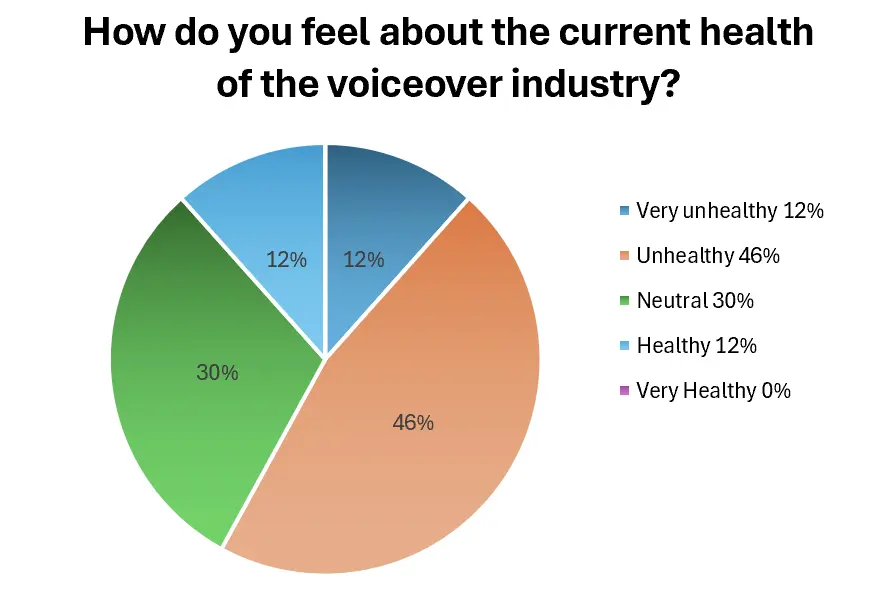
This year’s survey results suggest an industry that remains under pressure, but one that is noticeably more settled than it was a year ago. While concern hasn’t disappeared, it has softened. Around 58% of respondents describe the industry as unhealthy, but a significant 30% now feel neutral and 12% describe it as healthy, indicating that fewer people see the situation as actively worsening compared with last year’s more acute levels of concern. This perhaps points to a shift away from shock and towards a more realistic, adjusted outlook.
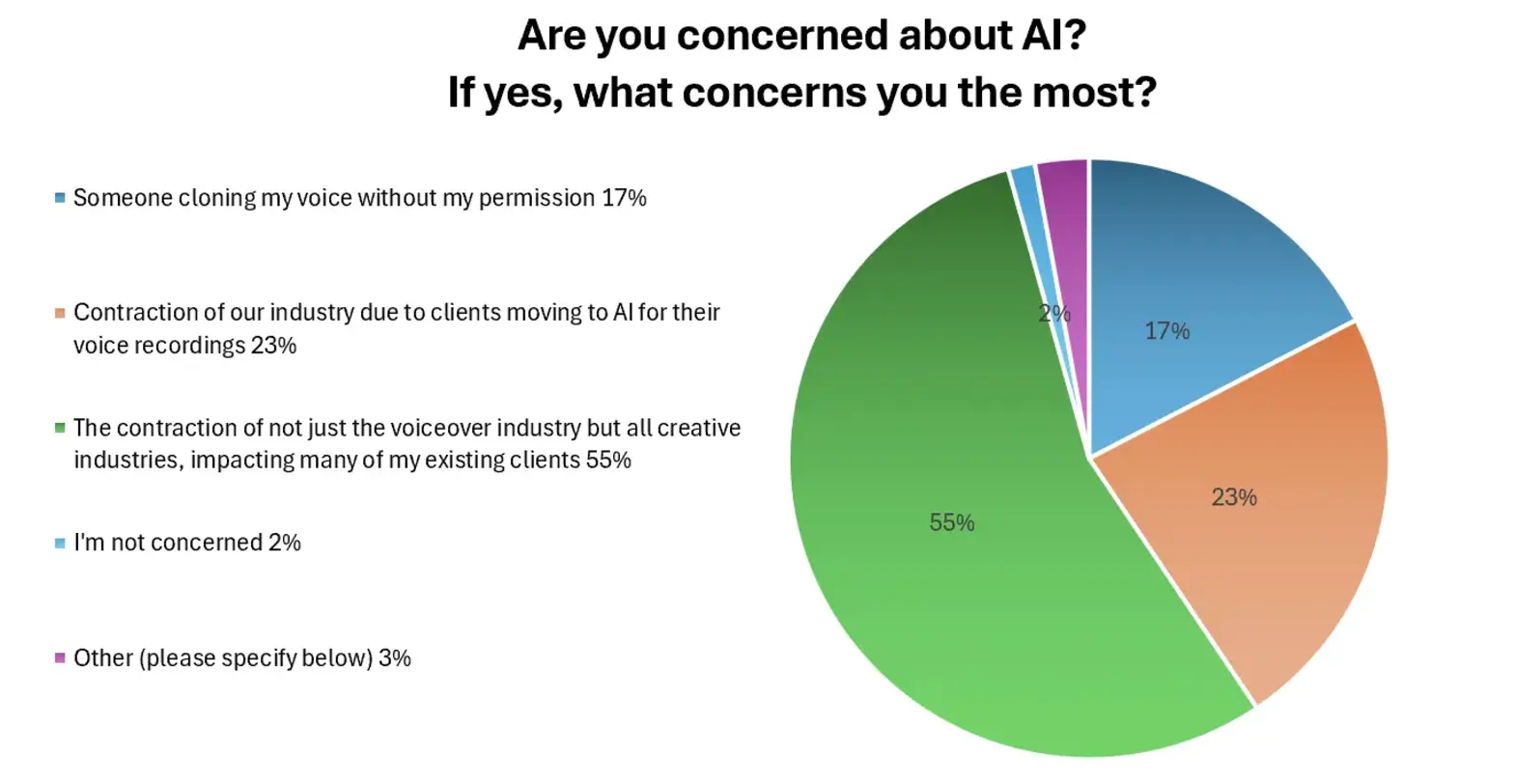
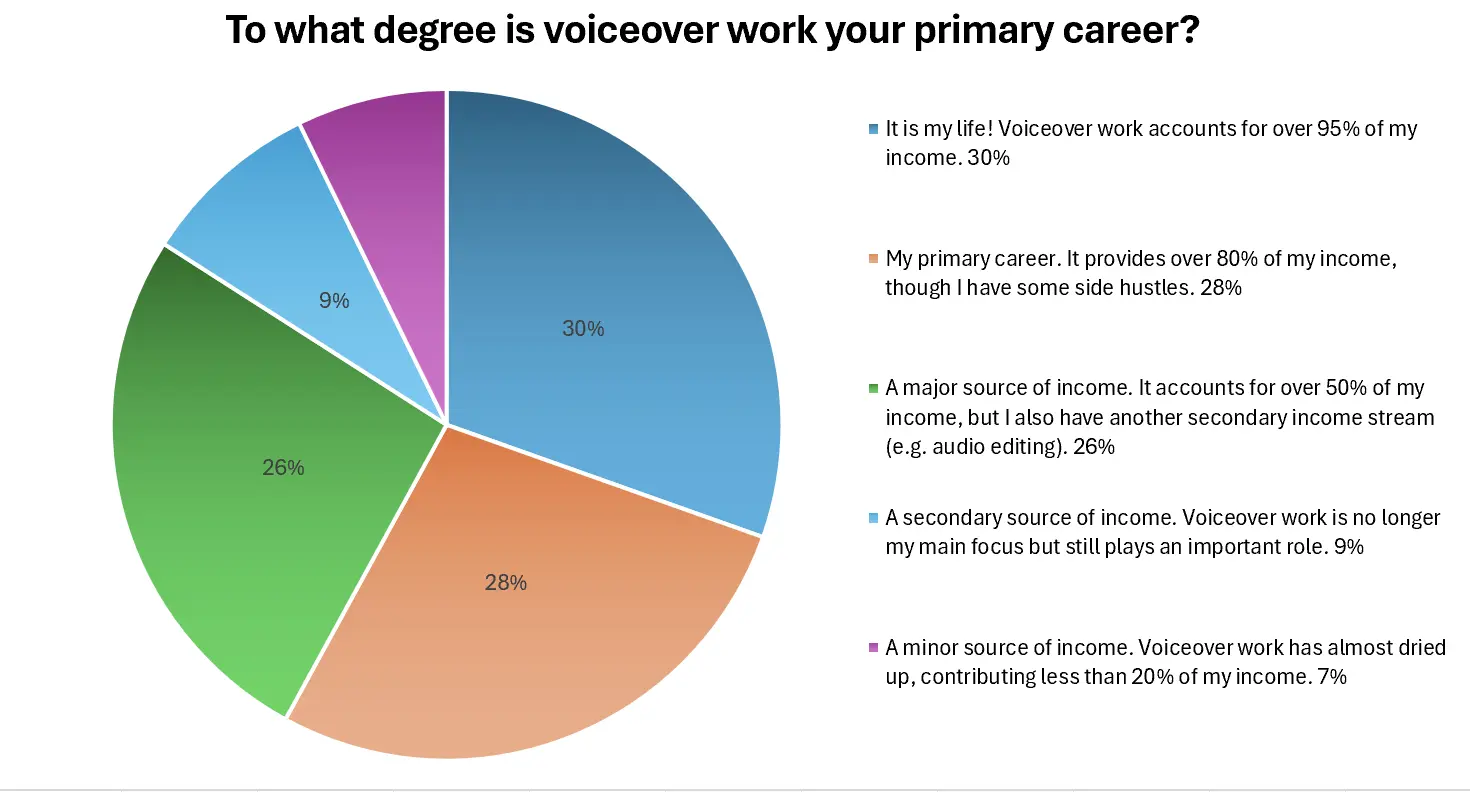
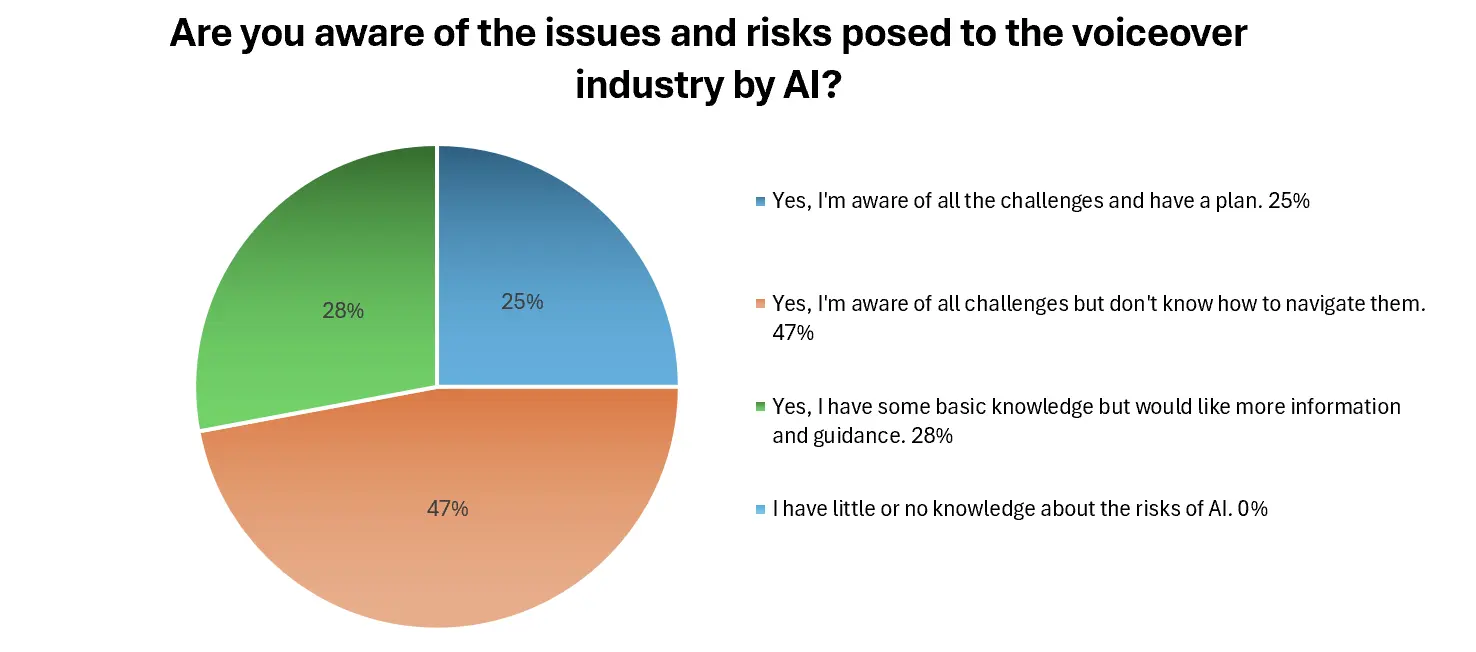
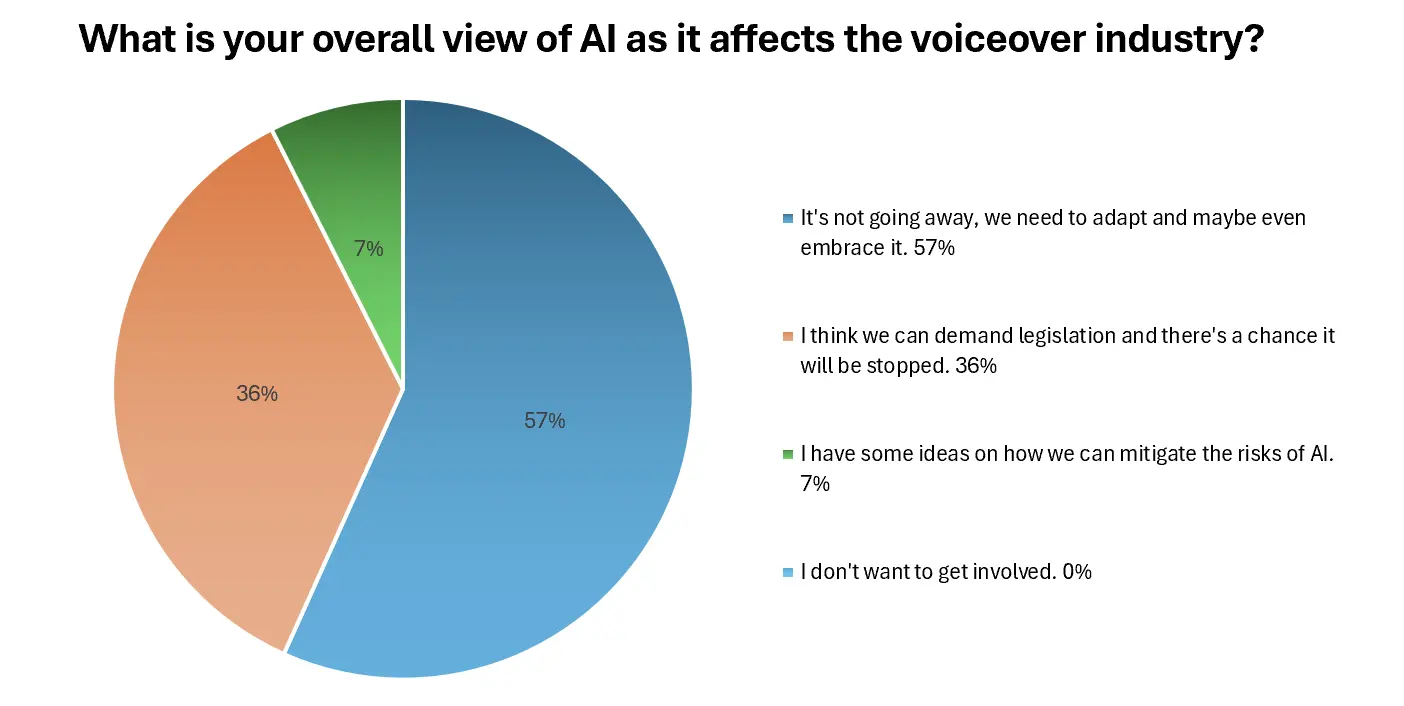
Financial pressures are still evident, yet commitment to voiceover work remains strong. Over 84% of respondents say voiceover is still their primary or major source of income, with nearly one third relying on it for over 95% of their earnings. At the same time, attitudes to AI appear to be maturing. Compared with last year, this reflects a community that is better informed, more pragmatic, and increasingly focused on pushing for legislation whilst having their own strategy.
Responses to the question about other income streams highlight just how broad and adaptable our voiceover community is. Many respondents work across related creative fields such as radio presenting, audio production, casting, directing, coaching, singing, photography, video and podcasting. Others reference work in areas like PR, marketing, media training, teaching, live announcing and content creation, often drawing directly on skills developed through the voiceover industry.
For most, additional income streams appear to complement their voiceover work, helping to stabilise earnings and reduce reliance on a single market.
Taken together, the feedback reinforces a picture of a highly skilled, flexible community that is adapting by broadening its professional base while keeping voiceover at the heart of what it does.
The comments were, at times, blunt, emotional, and deeply revealing, and many voices didn’t hold back! Given that this report is being read by the same community that contributed to it, that honesty feels appropriate. :-)
Alongside thoughtful ideas and offers of help, there was a clear undercurrent of frustration, fatigue and disillusionment. One respondent summed up how raw things feel by simply saying they were “at a loss, and feeling very down about the whole thing”.
AI featured heavily, but often as part of a wider breakdown in trust.
Several respondents were openly sceptical of companies positioning themselves as ethical or protective while moving quickly to monetise, specificially by plugging AI technologies, cheap gig style voice recordings, or by making money by encouraging newbies into the industry.
One voice suggested the industry may already be on the back foot, commenting that we should have acted sooner to “protect copyright, although it’s probably too late now”. Others questioned whether meaningful protection is possible without stronger, enforceable frameworks.
Trade bodies and unions were also criticised, most notably Equity. While some respondents acknowledged the difficulty of the task, others expressed disappointment at the pace or visibility of action, feeling that individual voices are being left to navigate major risks alone. The recurring sentiment was not hostility, but a sense that representation is struggling to keep up with the speed of change.
There was also criticism directed at the community itself. Several respondents pointed out that the issues facing the voiceover industry are “not solely AI related”, instead highlighting behaviours within the industry that may be accelerating longer-term damage. Some comments questioned whether the market is now oversaturated, whether certain styles have become overly formulaic, and whether the pursuit of quick wins or speculative AI income by some voices is contributing to an erosion of sustainability for everyone.
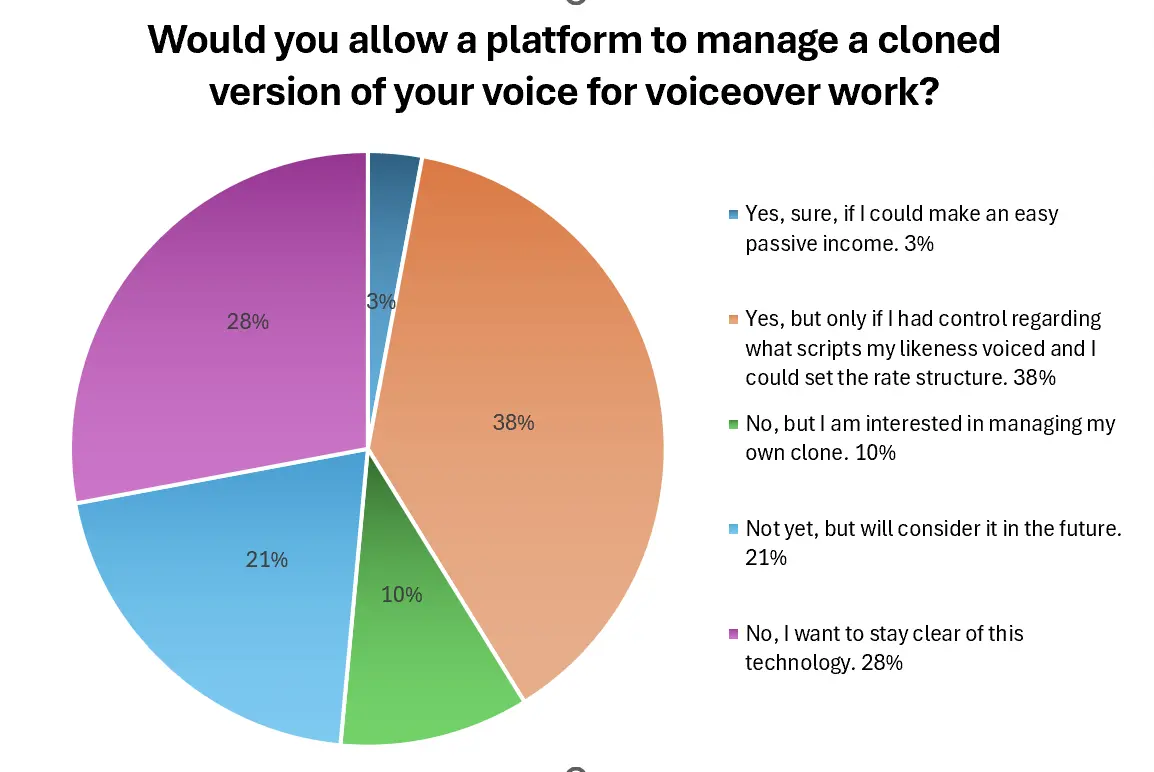
The decline in confidence around “easy passive income” from cloning, alongside more guarded attitudes overall, appears to reflect growing awareness that short-term opportunities may come at a longer-term cost. There is a feeling among some voices that larger companies are applying pressure through increasingly far-reaching terms and conditions, with one voice describing working with a large company as ‘selling your soul’.